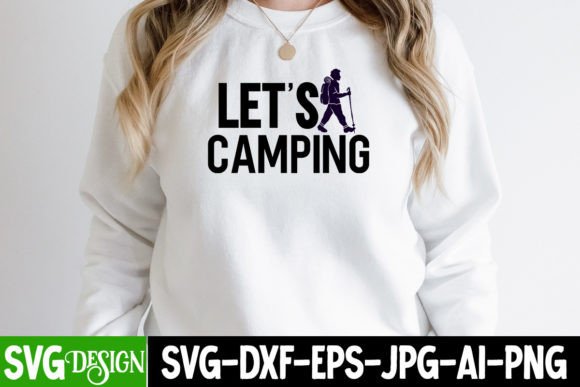
Let's Camping SVG Cut File Review
As a designer who has spent years translating digital vectors into tangible stitched goods, I approach every new asset with a mix of excitement and skepticism. The market is flooded with generic shapes, but finding a design that truly translates well from screen to fabric requires a critical eye. Today, I am evaluating the Let s Camping SVG Cut File, a digital asset categorized under Freebies and Graphics. My goal is not just to describe what it is, but to determine if it holds up under the pressure of a real-world embroidery project.
First Impressions: Mood and Visual Personality
When I first opened the Let s Camping SVG Cut File in my vector software, the immediate vibe was nostalgic yet modern. It captures that specific "outdoor adventure" aesthetic that resonates deeply with current trends in handmade decor and custom apparel. The layout is clean, avoiding the cluttered details that often plague lower-quality designs. For an embroidery file, simplicity is king. Complex gradients or microscopic details usually get lost when converted into satin stitch or fill stitch patterns. This design strikes a balance; the lines are bold enough to be readable at a distance, yet refined enough to look professional on a finished product.
The visual personality suggests warmth and community. It feels like the kind of graphic that would sit perfectly on a family reunion tote bag or a personalized sweatshirt for a hiking club. However, as a reviewer, I know that a pretty image on a screen does not guarantee a successful stitch. The true test lies in how the geometry behaves when the needle starts moving.
Real-World Application: From Digital to Stitched
To put this design through its paces, I imagined a specific scenario: creating a line of custom embroidered patches for a small shop product line. Let's say I am preparing a collection of canvas tote bags for an Etsy seller who specializes in outdoor gear. The Let s Camping SVG Cut File offers a strong foundation here. Because it is a layered file, I can isolate specific elements to create variations. Perhaps one version uses a dense fill stitch for the main text, while another uses a running stitch outline for a more delicate, vintage feel.
In terms of machine embroidery design workflow, the ability to manipulate layers is crucial. If I were using this for baby embroidery, such as a onesie or a nursery pillow cover, I would need to ensure the corners are rounded. Sharp points in vector files can sometimes result in thread bunching or skipped stitches on curved fabrics. Fortunately, the flow of this graphic seems to avoid extreme sharp angles, which bodes well for smooth stitching. For a sweatshirt embroidery project, where the fabric is thicker and textured, the boldness of the lettering ensures the message remains clear even against the heather grey or navy fleece background.
Stitch Density and Fabric Texture Considerations
One of the most common pitfalls in commercial embroidery is ignoring the relationship between stitch density and fabric texture. When working with the Let s Camping SVG Cut File, you must be mindful of the backing material. On a thin cotton tee, a high-density fill might cause puckering, ruining the drape of the garment. Conversely, on a heavy denim jacket or a thick applique design base, you might need to increase the density to prevent the fabric from showing through the stitches.
I always advise testing the design on scrap fabric first. Even if the vector looks perfect, the way your specific machine handles the turnarounds and underlay can change the final look. Check the thread colors carefully; a light-colored design on a dark fabric requires a solid underlay layer to pop. Without proper contrast, the design loses its visual appeal and the perceived value of the handmade product drops significantly.
Navigating Limitations and Technical Challenges
While the Let s Camping SVG Cut File is versatile, there are scenarios where caution is required. Small hoop sizes are a major constraint. If you attempt to fit the entire phrase into a 4x4 inch hoop, the lettering may become too compressed, leading to legibility issues. In these cases, consider cropping the design or focusing on a single word or icon element. Similarly, curved surfaces like caps present unique challenges. The stretch of the fabric can distort the design during hooping. You will likely need to adjust the stabilizer usage, perhaps opting for a cutaway rather than a tear-away to maintain tension and shape.
Detailed corners and tiny lettering are also areas to inspect closely. If the design includes very fine serifs or intricate internal details, they might get lost in the noise of the stitching process. For holiday embroidery projects where speed and volume matter, simplifying these areas can save time on editing and reduce the risk of thread breaks. Always review the design in black and white mockups before committing to expensive thread and fabric. This helps you see the silhouette clearly without the distraction of color, ensuring the composition works structurally.
Business Value for Craft Entrepreneurs
For the craft business owner or Etsy seller, the quality of your design assets directly impacts customer trust and buyer engagement. A poorly executed embroidery project signals amateurism, while a crisp, well-thought-out finish builds brand consistency. Using a reliable file like the Let s Camping SVG Cut File allows you to focus on the finishing touches—trimming loose threads, pressing the garment, and packaging the item beautifully.
This design fits naturally into several revenue streams. It works well as a personalized gift, a boutique branding element, or a component of a larger holiday embroidery collection. The fact that it comes as a digital download with multiple formats (SVG, EPS, PNG, DXF) adds flexibility. While the primary focus here is embroidery, the print-ready PNG file allows you to create printable mockups for your online store without needing to physically produce every variation first. This efficiency is vital for digital product sellers who need to scale their operations.
Practical Designer Notes Before You Start
Before you integrate the Let s Camping SVG Cut File into your workflow, keep these practical steps in mind:
- Verify Licensing: Since this is listed under Freebies, double-check the license terms. Does it allow for commercial use? Can you sell the finished embroidered items? Confirming this protects your business from legal issues down the road.
- Test Hoop Size: Measure the bounding box of the design against your machine's maximum hoop size. Do not guess; measure.
- Select the Right Stabilizer: Match the stabilizer to the fabric weight. Stretchy knits need more support than woven cottons.
- Check Thread Contrast: Ensure the thread colors you choose stand out against the fabric background to maximize visibility.
- Inspect Small Details: Zoom in on the vector file to ensure no stray nodes or overlapping paths exist that could confuse your digitizing software.
In conclusion, the Let s Camping SVG Cut File offers a solid starting point for designers looking to expand their outdoor-themed collections. It balances aesthetic appeal with functional geometry, making it suitable for everything from custom apparel to home decor. However, success ultimately depends on your technical execution. By respecting the limitations of your materials and machines, you can transform this digital asset into a high-quality, professional finished product that customers will love.